
From Concept to Delivery: Our journey with The Nature Collective in the South of Sweden
Updated: May 14
When The Nature Collective approached us to document their program, The I-Land Quest, we immediately knew this would be a different kind of production. The concept was simple but intense: participants kayak to their own remote island in Sweden to disconnect from daily life and reconnect with nature and themselves.
For us, the challenge was not only to create strong visuals, but also to manage a production in a completely remote environment with limited resources, changing weather conditions, and no access to electricity.

Here’s a practical breakdown of how we approached the project, from preparation to final campaign delivery.
Pre-production meeting
Since we had already worked together before, we were familiar with their style and way of working, which made it easy to quickly align.
In this meeting we went through all key details of the I-Land Quest, which was a new concept for them. Because of that, many elements like structure, timing, and logistics were still flexible and could change on the spot.
We also defined the goal of the content: to capture the essence of disconnecting, solitude, and nature in an authentic way, while creating material that works both for a brand film and social media. The focus was on deep and real storytelling.
With this information in place, we could start the first brainstorming and develop the creative direction for the project.
Key points:
The purpose behind the Quest itself
Making sure the visuals reflect authenticity rather than staged moments
Practical limitations on location and during production
How to balance storytelling with not interfering in the experience
Brainstorm and moodboard
To align creatively as a team, we built a shared moodboard in Milanote. Before production started, we first worked on different storylines and prepared for multiple scenarios that could happen during the Quest. Since the experience was nature-based and weather dependent, flexibility was an important part of the preparation.
From there, we started collecting inspiration that matched the feeling and direction we wanted for the film. We combined cinematic references, stills, photography, framing, and social media inspiration into one clear overview inside Milanote.
Having everything in one place helped the entire team stay aligned creatively and practically before production started. It gave everyone a clear understanding of the visual direction, while still leaving room to stay creative on location.
We also shared this moodboard with the client to make sure our creative direction and style fully matched their expectations before heading into production.
Key points to include:
Storyflow and narrative ideas
Visual references
Shot inspiration and framing
Camera movement ideas
Multiple production scenarios and backup ideas
Practical notes and gear planning
Divide tasks and responsibilities
Production planning & gear preparation
Before we left home, we focused on preparing all gear, logistics, and planning. Since we would be filming in remote nature without electricity, camping ourselves and using transport by kayak, good preparation was essential.
We selected lightweight equipment that could handle changing weather conditions and wouldn't need much power. Everything had to be planned and brought with us in advance, from food supplies and waterproof protection for the gear.
Key preparation points:
Camera and drone equipment
Waterproof storage and dry bags
Battery management and powerbanks
Food and camping supplies
Transport planning by kayak
Backup plans for weather conditions
Shotlists and story structure
Once everything was prepared, Meyke, Elbert and I drove to Sweden with a full car of equipment to begin setting up for the shoot.
Location scouting and acclimatization
We intentionally arrived a few days earlier in Sweden to prepare before the Quest started. This gave us time to organize and test all gear on location.
During these days, Elbert explored the islands and surrounding areas to find the best filming locations and kayak routes
At the same time, we also got to meet the participants before filming started. This helped create trust and made everyone feel more comfortable around the cameras. Since the Quest focuses on personal experiences and vulnerability, building that connection beforehand was an important part of the process.
These extra preparation days allowed us to enter the production with a clear plan, tested equipment, and a better understanding of both the environment and the people involved.
By scouting beforehand, we could prepare much better for the production days themselves and stay more flexible once filming started.
Key points:
Location scout for the best filming locations
Safe kayak routes
Building trust with participants
Getting used to the Swedish environment
The shoot
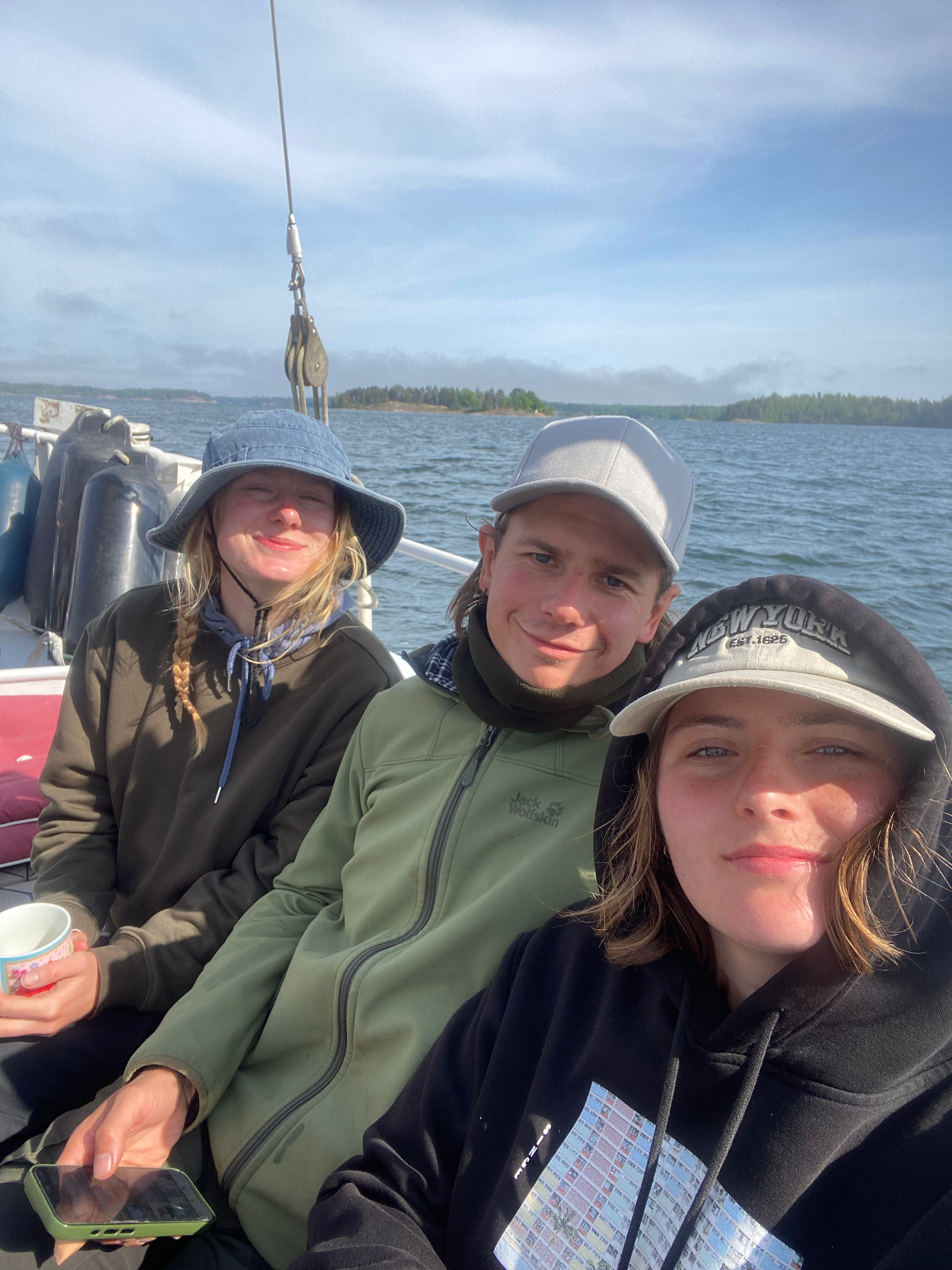
We started the day early, heading to the Kayak rental with the group. A support sailboat joined the trip as a backup for logistics and safety. Once everyone was ready, we started making our way towards the remote islands.
Our team had one Kayak and a small motorboat. We decided to switch roles between kayaking, filming, drone operating, and navigating the boat. Everything started smoothly, but after 1,5 hours one of the biggest challenges became crossing an open section of water with strong wind and heavy current.
At one point, the participants had to be towed by the most strong kayaker. Because of the water, nobody could really hear each other. While crossing the open part, the engine of the motorboat also failed. We quickly fixed it, but this moment was hectic. A real outdoor adventure!
Once we arrived, the participants each chose their own island for the quest. We selected our own base island and set up camp quickly. After, we visited several participants to capture moments of solitude, setting up camp, and them being alone in nature.
By the time we returned to our own island, it was already dark and we still had not eaten. Eventually we were given some warm meals by the support sailboat which we ate around the fire while continuing to capture night shots, solitude moments, and camp life.
Although the visuals may look peaceful and, the reality behind the scenes was physically demanding at times. Cold temperatures, long days, exhaustion, and sleeping outdoors created challenges for everyone. But these experiences gave us more knowledge about shooting and being outdoors.
The following day we focused on sunrise, creative shots, drone work and kayaking sequences. We experimented with different techniques such as macro filters, close-up lens work, tripod setups, and natural movement shots to create a more close feeling.
In the evening, Meyke decided to spend a night alone on a separate island to personally experience the silence and isolation that the participants were going through. This gave us a deeper understanding of the Quest itself and later helped shape the emotional direction of the edit.
On the final morning, we filmed the sunrise, packed up camp, and documented the return journey back to the mainland. Once back, we also captured reflections and interviews with the participants, which became an important final part of the story.
Key points:
Three full shoot days
Transport by motorboat and Kayak
Crossing rough open water and failure of the motorboat
Sleeping on uninhabited islands
Capturing the participants in solitude
Camping ourselves, making campfires and cooking simple food
Creative shots using macro lenses and tripod
Reflection interviews
Selection on location
After the shoot, we stayed in Sweden for a few extra days to immediately start working on the post-production process.
We reviewed all footage together, organized the files, and started building the first version of the storyline. Being able to look at the material directly on location helped us better understand which moments carried the most emotion and impact.
At the same time, we recorded the voice-over with Henrik, which helped shape the direction of the film. We also created and posted behind-the-scenes reels to share the process live during the project.
Key points:
Reviewing all footage on location
Selecting key moments for the edit
Building the first storyline and structure
Recording the voice-over
Creating and posting BTS reels of the trip
Final edit & online campaign
Once back home, we finalized the edit and prepared all deliverables for the online campaign. Besides the main film, we created multiple short-form reels, behind-the-scenes edits and photography for social media use.
The main goal of the content was to help promote future editions of the I-Land Quest by giving people a real feeling of what the experience is like. We tried to capture the feeling of reconnecting with nature in a way that inspires viewers to join the journey themselves.
By combining cinematic storytelling with authentic moments, we created a campaign that feels inspiring and personal.
Key points:
Final edit, color grading and sound design
Creating reels and BTS content for social media
Promoting future editions of the I-Land Quest
Building curiosity and interest around the journey
This project reminded us how important preparation and flexibility is when working in remote environments.
Working without electricity, carrying equipment by kayak, and constantly adapting to weather conditions forced us to simplify our workflow and focus on what truly mattered: authentic storytelling.
The collaboration with The Nature Collective was a practical lesson in working closely with nature.


Want to see the final content? Check the project below.
Comments